Showing posts with label Literary New York. Show all posts

Wednesday, June 21, 2017

THE GREAT GATSBY - F. SCOTT FITZGERALD

Original Dust Jacket Cover

I love New York on summer afternoons when everyone’s away. There’s something very sensuous about it—overripe, as if all sorts of funny fruits were going to fall into your hands(Jordan - The Great Gatsby)

That's a great sentence, and I love New York on summer afternoons, but that was a long while ago because nowadays on summer afternoons, New York is full of tourists. Ironically, the place where you might feel that lethargy would be where the Fitzgerald's were living - at Great Neck on the North Shore of Long Island - when Scott Fitzgerald started writing The Great Gatsby. To economize, the Fitzgerald's rented a house at 6 Gateway Drive for $300 a month (they had been paying $200 a week to live at the Plaza).

Fitzgerald Home 1922-1924

Fitzgerald wrote the first 3 chapters of Gatsby at Great Neck (the house is still there) and finished the manuscript when they moved to the French Riviera - which was a cheaper place to live than Great Neck. At that time.

Unlike Hemingway and Wolfe, Fitzgerald didn't swear. The worst he might call someone was a "colossal egg." So, his attitude about the neighborhood was evident in calling it West Egg. When he and Zelda lived there, 1922-1924, the neighbors were a mixture of old and new money - Groucho Marx and Samuel Goldwyn had houses in that part of Long Island along with Jock Whitney, William K. Vanderbilt (now Eagle's Nest Museum) and Otto Kahn (now Oheka Castle Hotel. Kahn's Manhattan house/castle is now a private school right across the street from the Carnegie Museum).

There's a Great Gatsby boat tour: http://greatgatsbyboattour.org/ so you can see the houses along the Gold Coast. Some of the houses from the book have been torn down - most notably Lands End which could have been the Buchanan's or Gatsby's house.  And although many people guess which houses on the Gold Coast were used in the movie, there weren't any, because the movie was filmed in Australia.
Lands End Estate
For me, the most memorable scenes in The Great Gatsby are not at the houses, but are the ones involving the creepy sign with the eyes.

The eyes of Doctor T. J. Eckleburg are blue and gigantic—their retinas are one yard high. They look out of no face, but instead, from a pair of enormous yellow spectacles which pass over a nonexistent nose. (The Great Gatsby)


I imagined a pair of eyes and round spectacles swinging from a pole extended from a building. And I thought the sign was in Red Hook, believing that the drive Gatsby and the Buchanans took from Long Island to the City was through Brooklyn because I thought East Egg was East Hampton.


But the book was really so clear about them driving through Queens.


The city seen from Queensboro Bridge is always the city seen for the first time, in its first wild promise of all the mystery and beauty in the world…. ‘Anything can happen now that we’ve slid across this bridge,’ I thought. ‘Anything at all. (Nick - The Great Gatsby)

The place where the creepy sign was supposedly located is now the site of Shea Stadium.


.

[NOTE: The Great Gatsby is not my favorite Fitzgerald book. My favorite is a book of short stories set on a studio lot in Los Angeles - The Pat Hobby Stories. They are hilarious.]


Saturday, September 12, 2015

MY PERSONAL LITERARY WALKING TOUR

You took a walk on a Sunday afternoon and came to a nice neighborhood, very refined.  You saw a small one of these trees through the iron gate leading to someone’s yard and you knew that soon that section of Brooklyn would get to be a tenement.  The tree knew.  It came there first.  Afterward, poor foreigners seeped in and the quiet old brownstone houses were hacked up into flats, feather beds pushed out on the windowsills to air and the Tree of Heaven flourished.  That was the kind of tree it was.  It liked poor people.
                                               
Betty Smith A Tree Grows in Brooklyn

The NY Parks & Rec Dept has a literary tour of Brooklyn – pretty abbreviated since it focuses on Brooklyn Heights.  I never participated in it, preferring to explore further afield, and almost right away after moving to Brooklyn I took my own literary tour.  It was not to see where an author lived particularly, but to see the part of Brooklyn described in Betty Smith’s semi-autobiographical novel, A Tree Grows in Brooklyn.  The appeal was the reality that Betty Smith created for life in Brooklyn as she was growing up.  The richness of the weather,  cultural mix, morality, survival of poverty and rise from poverty, neighborhood streets, and a child's thoughts about all of it.  Smith's love of Brooklyn was compelling – a place so difficult, dirty, rough, vulgar, violent and scary and yet so beautiful, passionate, creative, vigorous, historic, intense and fun.  You can’t know Brooklyn from the outside or a book. I had to experience it for myself.

I reread Smith’s novel just before moving to Brooklyn and made notes of the streets so that I could pinpoint Francie’s apartment building and other places that Betty Smith describes in the book, hoping somehow to capture a sense of what Brooklyn was like in the 1940s.  That tree by the way, that Francie called Tree of Heaven, is also known as ailanthus altissima.  It is everywhere in Brooklyn.  Surviving.

At the beginning, when Francie and her brother Neeley are carrying their junk and rags to sell at Carney’s, she names all the streets they pass as they walk down Manhattan Avenue – Ten Eyck, Stagg Street to Carney’s on Scholes Street.  After selling their rags, they walked further south on Manhattan Avenue past Meserole, Montrose, Johnson, Boerum, McKibbin, Siegel, Moore, Varet, and Cook to the nickel and dime store on Broadway.  The walk Francie and Neeley took is the now in the vicinity  of the Williamsburg Public Housing Buildings (blocks of them) and about a half-mile from the Williamsburg Hassidic community.

The area is now filled with small discount stores with plastic brooms and mops in plastic buckets near the door with all sorts of plastic tubs and kitchenware in small front windows.  The tiny grocery store windows are completely covered with ads.There are little stores selling clothing, hair products and wigs, as well as a few botanicas.  It was easy to find the poverty and ugliness that Betty Smith described, as well as the cultural melting pot.  Many of the buildings were original, including the apartment building where Francie's mother scrubbed the stairs.  Looking at them -- rusty and grand -- gave me the sense of history, endurance, that permeates New York.  And like the hundred coats of paint on walls, railings, doors, the first layer is still the there.  All the layers are there – it just takes imagination to find them.
There are a few interesting things I learned in researching Betty Smith.  She didn’t finish high school and waited until her first husband finished law school before she started her secondary education and writing career.  She got divorced the year the book was published.  Although the book is about an Irish family, Betty Smith’s parents were poor German immigrants, and that change was made because the book was published during WWII.  I also found it interesting that after divorcing her first husband, Betty Smith moved to Chapel Hill, NC, home of the University of North Carolina where Thomas Wolfe went to study, much earlier in the century, at age fifteen.


Monday, July 27, 2015

BROOKLYN PROMENADE & THOMAS WOLFE


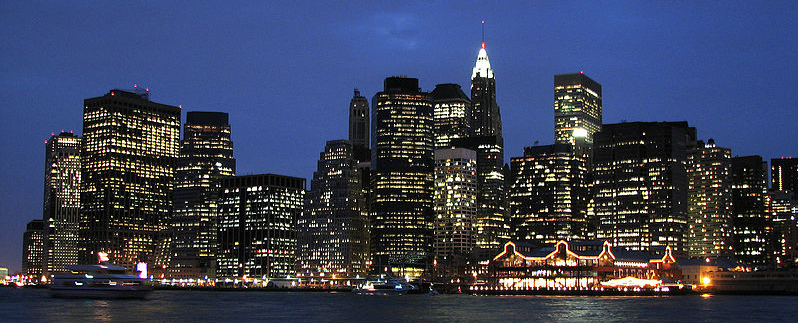
Evening is coming fast, and the great city is blazing there in your vision in its terrific frontal sweep and curtain of star-flung towers, now sown with the diamond pollen of a million lights, and the sun has set behind them, and the red light of fading day is painted upon the river - and you see the boats, the tugs, the barges passing, and the winglike swoop of bridges with exultant joy - and night has some and there are ships there - there are ships - and a wild intolerable longing in you that you cannot utter.


(from the short story No Door by Thomas Wolfe)


This excerpt from No Door seems to take place at a home in Brooklyn Heights on the palisade that faces the old docks on the East River and the skyline of lower Manhattan.  It’s the place where photographers take those panoramic photos of Manhattan for postcards and posters.  There’s a park with a wide sidewalk with benches.  You saw it in the movie Moonstruck when the grandfather took his dogs to howl at the moon. Nannies take children there in strollers and prams during the day.  Lovers patrol at night.

Of course, at the time Wolfe was describing the East River docks, there was still a great deal of manufacturing in Brooklyn, and the waterfront was much different.  There were many ships moving in and out of the docks with longshoremen on the wharves loading and unloading goods stored in the warehouses that are now renovated into condominiums.  

While he was writing the novel, Of Time and the River, Thomas Wolfe lived at 5 Montague Terrace, directly across the street from the houses that line the palisade (W.H. Auden lived two doors away at 1 Montague Terrace).  These houses were built by Wall Street tycoons who thought it more convenient to take the ferry to the Manhattan Battery in the morning than to drive down to Lower Manhattan from a house on Fifth Avenue. After the 1929 crash, many of the houses were abandoned, boarded up.  Brooklyn itself fell into a decrepit state and didn't recover until the 1980s.

But Wolfe was not living in Brooklyn Heights when he wrote No Door.  At that time Wolfe was living in the basement of a house at 40 Verandah Place.  The area was referred to as South Brooklyn then.  Modern realtors renamed it Cobble Hill.  Here’s what Thomas Wolfe wrote about his basement apartment on Verandah Place:


Well, you say, living alone in South Brooklyn has its drawbacks.  The place you live in is shaped just like a Pullman car, except it is not so long and has only one window at each end.  There are bars over the front window that your landlady has put there to keep the thugs in that sweet neighborhood from breaking in; in the winter the place is cold and dark, and sweats with clammy water; in the summer you do all the sweating yourself, but you do plenty of it, quite enough for anyone; the place gets hot as hell.  (from No Door)

In the photograph, you can see that the basement windows on the homes on Veranda Place are about 8 inches tall.  One hopes that the ceilings are higher because Wolfe was 6’5” and liked to stand as he wrote, using the top of his refrigerator as a desk top.

Thomas Wolfe captured New York more passionately than any writer I can imagine, describing mundane places, like the subway, with such accurate intensity that it can be felt as well as imagined:

Thus we streamed down from the free night into the tunnel’s stale and fetid air again, we swarmed and hurried across the floors of gray cement, we rushed and pushed our way along as furiously as if we ran a race with time, as if some great reward were to be won if we could save two minutes or as if we were hastening onward, as fast as we could go toward some glorious meeting, some happy and fortunate event, some goal of beauty, wealth, or love… (from Death the Proud Brother)


Thus, he engages us in the frenetic pace of the city.


The Parks Department gives literary walking tours about Brooklyn.  You can find more about the tours here:  http://www.nycgo.com/articles/brooklyn-literary-tour-nyc


post by Alana Cash